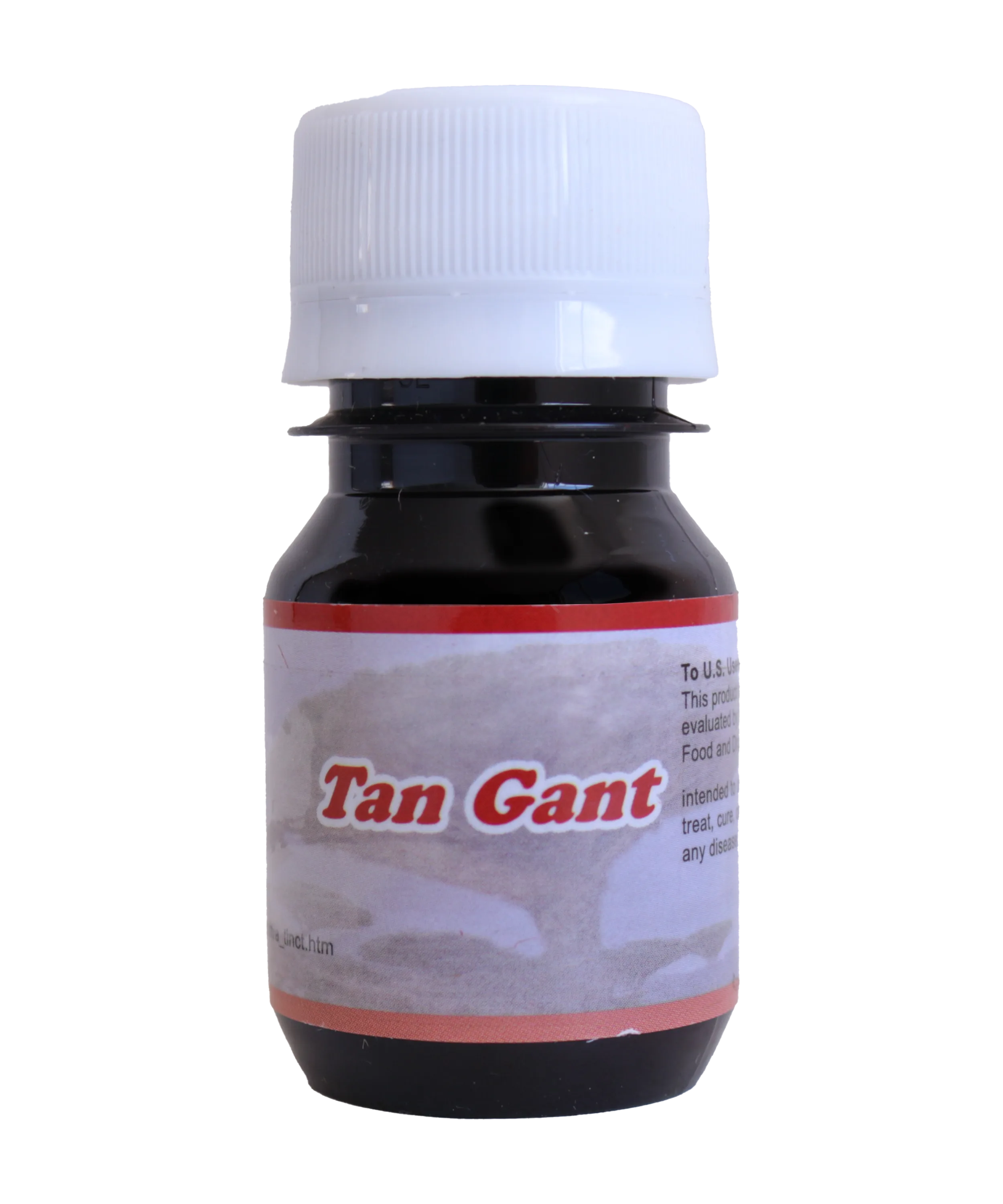
Tan Gant - 30 ml.
Always consult your healthcare provider before starting any new herbal protocol.
Description:
The Tangarana ant (Pseudomyrmex triplarinus) gets its name from the Tangarana, a member of the Triplaris genus of trees, primarily Triplaris americana, a natural "myrmecophyte," which forms a symbiotic, mutualistic relationship with the ants.
The indigenous of the Peruvian Amazon use the ant venom to treat rheumatoid arthritis. Traditionally, the afflicted person would go to the tree, disturb the ants, and intentionally allow their hands to be bitten. However, a concentrated tincture can be prepared which has a similar effect without the need to be bitten. The effect is analgesic and anti-inflammatory, and although the former property is generally not as strong as Izulant (tm) -- (above) -- it is generally longer lasting. The anti-inflammatory property is thought to derive chiefly from "myrmexins," with six isoforms of venom proteins.
The response from the orthodox community has been guarded, as is the case with any medicinal material that doesn't come with a proprietary monopoly, but even then the results can only be downplayed so much: "Interestingly enough, the species of Pseudomyrmex triplarinus has a venom that has been analyzed and it seems as though it has some qualities which can be used in the treatment of rheumatoid arthritis (Ward 2002). Its venom has anti-inflammatory properties (Pan and Hink 2000) and analgesic agents useful in treating autoimmune diseases, especially rheumatoid arthritis (Sukhwani). The venom . . . analysis shows that it has high contents of glycoprotein, heparin, chondroitin sulphate, polysaccharides and other hydrocarbons. It has high activity when it is highly purified, with very few adverse effects, allowing for long-lasting results.
Instructions for Use:
Puncture the top of the bottle with a large needle, then apply anywhere from 2 to 10 drops over the area where pain is experienced. If using this product together with Cansema, you may use the product at any stage of the escharotic process. If applying to the site of an eschar or other puscular formation, be sure to cover liberally the peripheral area around the scab itself. It takes about 40 minutes before pain relief commences, and pain relief lasts for an average of twelve (12) hours.
